

Florida’s sunshine is famous, but sun exposure here isn’t just a summer or beach-only issue. Across the Sunshine State, UV exposure shifts with the seasons, often catching people off guard in spring, lingering longer than expected in fall, and remaining relevant even during Florida’s mild winters. Weather patterns and UV levels don’t always align with how conditions feel day to day. Mild temperatures, cloud cover, or coastal breezes may improve comfort, but they don’t reliably mean lower UV exposure.
This city-by-city Florida weather and UV Index guide shows how temperature, rainfall, and UV exposure change throughout the year, from winter and spring through summer and fall, across different regions of the state. Each section includes a short narrative followed by monthly tables, helping you understand how Florida’s seasonal weather patterns influence UV exposure and why protection often matters earlier, longer, and more consistently than people expect.
How to use this Florida Weather and UV Index Guide
This guide is designed to help you understand when UV exposure tends to matter most where you live, travel, or spend time outdoors in Florida. Rather than focusing on day-to-day forecasts, it highlights seasonal patterns so you can plan ahead and build more consistent sun protection habits.
- Start with your region. Florida’s UV patterns vary by geography, so checking your region first helps set expectations for how intense and how long exposure typically lasts.
- Understand what the UV numbers mean. The UV Index shows how quickly sun exposure can affect skin. Use the ranges below as a quick reference when reviewing each city’s monthly data.
- Pay attention to peak UV, not just temperature. The Average Max UV Index shows the typical daily peak for each month. UV often increases before the hottest weather arrives and can be high even on mild-feeling days.
- Don’t assume rain or clouds mean low UV. Rain frequency reflects how often storms occur, not all-day cloud cover. Cloud cover can reduce UV, but thin or broken clouds often let a lot through; so it’s still worth checking the UV Index, even on gray or showery days.
- Plan around the strongest hours. Late morning through mid-afternoon is when UV is usually highest, regardless of season.
- Adjust for your environment. Beaches, boats, and open water increase exposure due to reflection from sand and water.
- Build protection into your routine. Daily habits are more reliable than reacting only on extreme UV days.
With that foundation in place, the guide moves into a region-by-region view of Florida. Each city section pairs local weather patterns with seasonal UV behavior, offering a clearer picture of how sun exposure shows up where people actually live, travel, and spend time outdoors.
UV Index Quick Reference
| UV Index | Category | What it means for exposure |
|---|---|---|
| 0 | None | Typically occurs at night. During the day, a true 0 is uncommon, and some UVA may still be present. |
| 1–2 | Low | Minimal risk for short periods outdoors. |
| 3–5 | Moderate | UV exposure begins to matter, especially around midday. |
| 6–7 | High | Skin damage can occur faster than expected. |
| 8–10 | Very High | Unprotected skin can burn quickly, even on mild or cloudy days. |
| 11+ | Extreme | Intense UV exposure. Extra precautions are recommended. |
Note: The UV Index values referenced throughout this guide reflect long-term, typical peak conditions. Actual daily UV levels can vary due to factors like cloud cover, atmospheric conditions, and weather systems, so checking the daily UV forecast is always recommended.
Tampa Bay Area
UV exposure in the Tampa Bay Area including Tampa, St. Petersburg, and Clearwater rises quickly in spring and remains high through early fall, with coastal reflection making sun exposure feel stronger than expected even on mild or breezy days.
St. Petersburg
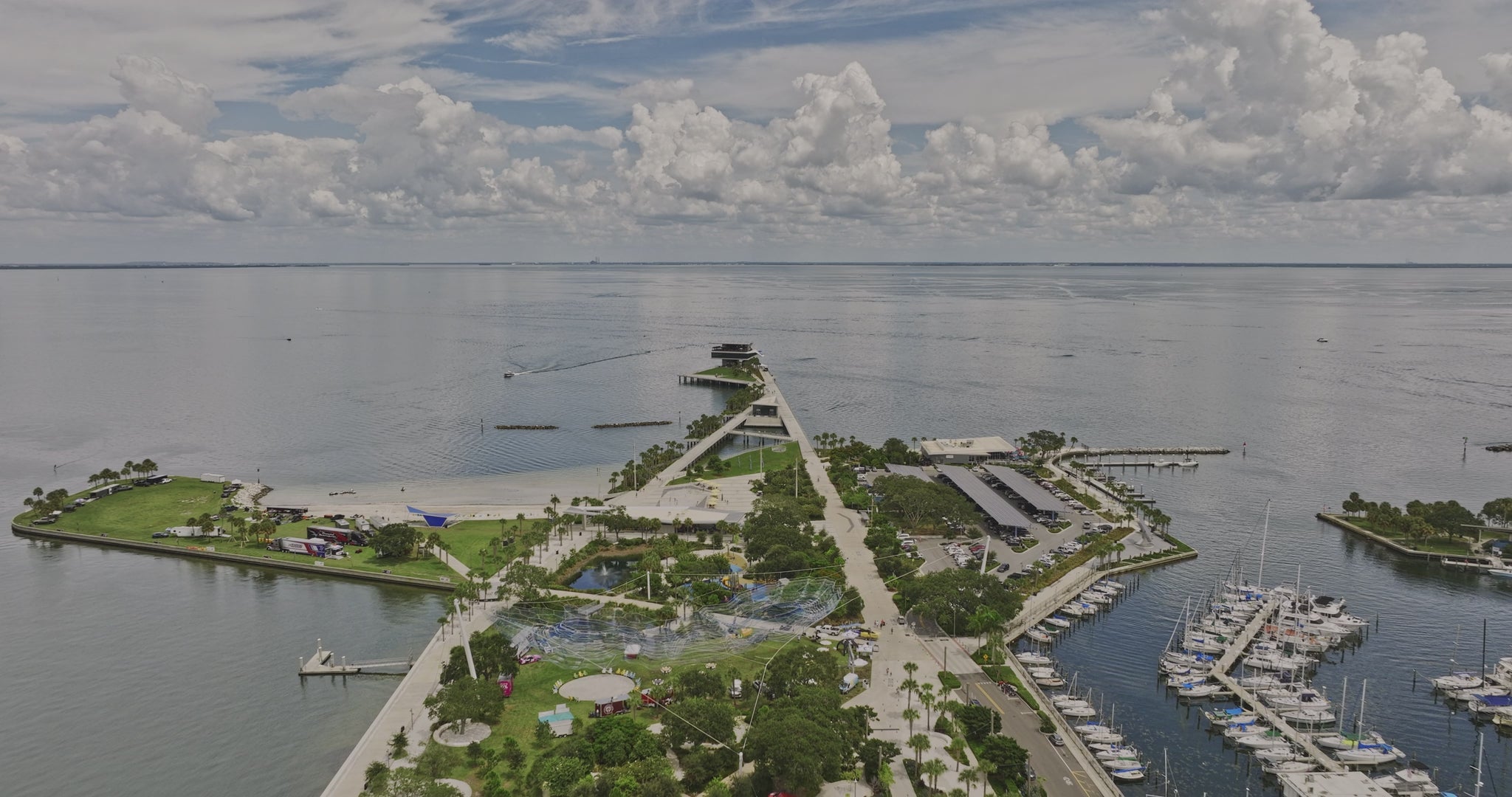
St. Petersburg (“St. Pete”) is a Gulf Coast city known for waterfront parks, walkable neighborhoods, and a relaxed coastal pace. Nearby favorites include St. Pete Beach, Treasure Island, Gulfport, Fort De Soto Park, and the St. Pete Pier, all of which encourage long days outdoors near reflective water. UV exposure here climbs quickly in spring and remains elevated through early fall, often feeling stronger than expected even on breezy or partly cloudy days.
In a city that averages 361 sunny days a year, sun exposure isn’t occasional. It’s daily. That reality is what inspired the founding of Essuntials® in St. Pete, with the goal of making sun protection feel as natural as getting dressed.
Monthly Climate Expectations
| Month | Average High (°F / °C) | Average Low (°F / °C) | Average Max UV Index | Rain Frequency (days/month) | Average Rainfall (in / cm) |
| January | 70°F / 21°C | 55°F / 13°C | 5 (Moderate) | 7 | 2.1 in / 5.3 cm |
| February | 70°F / 21°C | 52°F / 11°C | 7 (High) | 7 | 2.4 in / 6.1 cm |
| March | 77°F / 25°C | 57°F / 14°C | 9 (Very High) | 6 | 3.0 in / 7.6 cm |
| April | 82°F / 28°C | 62°F / 17°C | 10 (Very High) | 4 | 1.8 in / 4.6 cm |
| May | 86°F / 30°C | 68°F / 20°C | 11 (Extreme) | 6 | 2.9 in / 7.4 cm |
| June | 89°F / 32°C | 73°F / 23°C | 11 (Extreme) | 12 | 7.5 in / 19.1 cm |
| July | 90°F / 32°C | 75°F / 24°C | 11 (Extreme) | 15 | 7.3 in / 18.5 cm |
| August | 90°F / 32°C | 73°F / 23°C | 11 (Extreme) | 17 | 7.7 in / 19.6 cm |
| September | 88°F / 31°C | 73°F / 23°C | 10 (Very High) | 12 | 7.0 in / 17.8 cm |
| October | 84°F / 29°C | 66°F / 19°C | 8 (Very High) | 7 | 2.7 in / 6.9 cm |
| November | 77°F / 25°C | 57°F / 14°C | 6 (High) | 6 | 1.8 in / 4.6 cm |
| December | 72°F / 22°C | 52°F / 11°C | 5 (Moderate) | 6 | 2.0 in / 5.1 cm |
Data sources: Temperature and rainfall reflect long-term climate normals (such as NOAA averages). UV Index values show typical monthly peak levels based on EPA/WHO-style datasets. All values are general guides rather than daily forecasts; frequent rain often means brief storms, not all-day cloud cover.
UV Takeaway
St. Petersburg’s UV exposure rises quickly in spring and remains elevated through early fall, particularly near the water. Breezes and mild temperatures can make conditions feel comfortable, but they don’t reliably reduce UV. Planning protection earlier in the day helps prevent exposure from adding up unexpectedly.
Tampa
Tampa is a Gulf Coast metro with a mix of urban neighborhoods, waterfront parks, and bay-front outdoor spaces. Nearby areas include Bayshore Boulevard, Davis Islands, and Tampa Riverwalk, where people often spend extended time outdoors. While it is slightly less exposed than open beaches, UV levels in Tampa still rise quickly in spring and remain high through early fall.
Monthly Climate Expectations
| Month | Average High (°F / °C) | Average Low (°F / °C) | Average Max UV Index | Rain Frequency (days/month) | Average Rainfall (in / cm) |
| January | 70°F / 21°C | 50°F / 10°C | 5 (Moderate) | 7 | 2.4 in / 6.1 cm |
| February | 70°F / 21°C | 52°F / 11°C | 7 (High) | 7 | 2.7 in / 6.9 cm |
| March | 77°F / 25°C | 57°F / 14°C | 9 (Very High) | 6 | 3.2 in / 8.1 cm |
| April | 82°F / 28°C | 62°F / 17°C | 10 (Very High) | 4 | 2.0 in / 5.1 cm |
| May | 86°F / 30°C | 68°F / 20°C | 11 (Extreme) | 6 | 3.1 in / 7.9 cm |
| June | 89°F / 32°C | 73°F / 23°C | 11 (Extreme) | 12 | 7.6 in / 19.3 cm |
| July | 90°F / 32°C | 75°F / 24°C | 11 (Extreme) | 15 | 7.4 in / 18.8 cm |
| August | 90°F / 32°C | 73°F / 23°C | 11 (Extreme) | 17 | 7.9 in / 20.1 cm |
| September | 88°F / 31°C | 73°F / 23°C | 10 (Very High) | 12 | 7.1 in / 18.0 cm |
| October | 84°F / 29°C | 66°F / 19°C | 8 (Very High) | 7 | 3.0 in / 7.6 cm |
| November | 77°F / 25°C | 57°F / 14°C | 6 (High) | 6 | 2.0 in / 5.1 cm |
| December | 72°F / 22°C | 52°F / 11°C | 5 (Moderate) | 6 | 2.1 in / 5.3 cm |
UV Takeaway
In Tampa, UV exposure rises quickly in spring and remains high through early fall, even when conditions feel hazy or humid rather than hot. Urban shade and bay breezes can make the sun feel less intense, but they do not reliably reduce UV, especially around midday. Planning protection around peak UV hours helps prevent exposure from quietly adding up during everyday outdoor routines.
Clearwater
Clearwater is a beach-focused Gulf Coast destination known for wide white-sand beaches and long, sun-filled days near the water. Nearby areas include Dunedin, Caladesi Island, Honeymoon Island, and Clearwater Beach. UV exposure here is amplified by reflection from sand and water and often feels stronger than expected from spring through early fall.
Monthly Climate Expectations
| Month | Average High (°F / °C) | Average Low (°F / °C) | Average Max UV Index | Rain Frequency (days/month) | Average Rainfall (in / cm) |
| January | 69°F / 21°C | 49°F / 9°C | 5 (Moderate) | 7 | 2.2 in / 5.6 cm |
| February | 70°F / 21°C | 51°F / 11°C | 7 (High) | 7 | 2.5 in / 6.3 cm |
| March | 76°F / 24°C | 56°F / 13°C | 9 (Very High) | 6 | 3.1 in / 7.9 cm |
| April | 81°F / 27°C | 61°F / 16°C | 10 (Very High) | 4 | 1.8 in / 4.6 cm |
| May | 85°F / 29°C | 67°F / 19°C | 11 (Extreme) | 6 | 2.8 in / 7.1 cm |
| June | 89°F / 32°C | 72°F / 22°C | 11 (Extreme) | 12 | 7.4 in / 18.8 cm |
| July | 90°F / 32°C | 74°F / 23°C | 11 (Extreme) | 15 | 7.2 in / 18.3 cm |
| August | 90°F / 32°C | 74°F / 23°C | 11 (Extreme) | 17 | 7.8 in / 19.8 cm |
| September | 88°F / 31°C | 73°F / 23°C | 10 (Very High) | 12 | 7.1 in / 18.0 cm |
| October | 83°F / 28°C | 66°F / 19°C | 8 (Very High) | 7 | 2.6 in / 6.6 cm |
| November | 76°F / 24°C | 57°F / 14°C | 6 (High) | 6 | 1.8 in / 4.6 cm |
| December | 71°F / 22°C | 52°F / 11°C | 5 (Moderate) | 6 | 2.1 in / 5.3 cm |
UV Takeaway
Clearwater’s beach setting amplifies UV exposure from spring through early fall, especially during late morning and midday hours. Reflection from white sand and open water increases overall exposure, even on breezy or partly cloudy days. Planning protection early in the day helps limit UV buildup during long beach or waterfront outings.
Southwest Florida
Southwest Florida combines intense sunlight with water reflection, creating high UV exposure for much of the year, especially from spring through early fall.
Sarasota
Sarasota blends Gulf Coast beaches with arts, dining, and walkable neighborhoods close to the water. Nearby destinations include Siesta Key, Lido Key, Longboat Key, Venice, Anna Maria Island, and Bradenton, all known for outdoor recreation. UV exposure climbs quickly in spring and remains elevated through early fall, particularly during midday hours.
Monthly Climate Expectations
| Month | Average High (°F / °C) | Average Low (°F / °C) | Average Max UV Index | Rain Frequency (days/month) | Average Rainfall (in / cm) |
| January | 72°F / 22°C | 52°F / 11°C | 5 (Moderate) | 7 | 2.1 in / 5.3 cm |
| February | 72°F / 22°C | 52°F / 11°C | 7 (High) | 7 | 2.3 in / 5.8 cm |
| March | 77°F / 25°C | 57°F / 14°C | 9 (Very High) | 6 | 3.0 in / 7.6 cm |
| April | 82°F / 28°C | 61°F / 16°C | 10 (Very High) | 4 | 1.8 in / 4.6 cm |
| May | 88°F / 31°C | 68°F / 20°C | 11 (Extreme) | 7 | 3.2 in / 8.1 cm |
| June | 90°F / 32°C | 72°F / 22°C | 11 (Extreme) | 12 | 8.0 in / 20.3 cm |
| July | 90°F / 32°C | 73°F / 23°C | 11 (Extreme) | 15 | 7.6 in / 19.3 cm |
| August | 90°F / 32°C | 73°F / 23°C | 11 (Extreme) | 16 | 8.1 in / 20.6 cm |
| September | 90°F / 32°C | 73°F / 23°C | 10 (Very High) | 13 | 7.5 in / 19.1 cm |
| October | 84°F / 29°C | 66°F / 19°C | 8 (Very High) | 7 | 2.8 in / 7.1 cm |
| November | 77°F / 25°C | 59°F / 15°C | 6 (High) | 6 | 2.0 in / 5.1 cm |
| December | 73°F / 23°C | 54°F / 12°C | 5 (Moderate) | 6 | 2.2 in / 5.6 cm |
UV Takeaway
Sarasota’s UV exposure rises quickly in spring and remains elevated through early fall, especially during late morning and midday hours. Easy access to beaches, waterfront paths, and outdoor dining means exposure often adds up gradually over long days outside. Mild temperatures or passing clouds can make the sun feel less intense than it is.
Fort Myers
Fort Myers sits along Southwest Florida’s Gulf Coast and serves as a gateway to barrier islands and wildlife preserves. Nearby destinations include Sanibel, Captiva, Cape Coral, Bonita Springs, and Naples, where time outdoors often centers around the water. UV exposure becomes intense from spring through early fall, with summer storms offering little lasting relief.
Monthly Climate Expectations
| Month | Average High (°F / °C) | Average Low (°F / °C) | Average Max UV Index | Rain Frequency (days/month) | Average Rainfall (in / cm) |
| January | 75°F / 24°C | 54°F / 12°C | 5 (Moderate) | 6 | 1.9 in / 4.8 cm |
| February | 75°F / 24°C | 54°F / 12°C | 7 (High) | 6 | 2.1 in / 5.3 cm |
| March | 80°F / 27°C | 59°F / 15°C | 9 (Very High) | 6 | 3.0 in / 7.6 cm |
| April | 84°F / 29°C | 63°F / 17°C | 11 (Extreme) | 4 | 1.9 in / 4.8 cm |
| May | 90°F / 32°C | 68°F / 20°C | 11 (Extreme) | 8 | 3.6 in / 9.1 cm |
| June | 91°F / 33°C | 73°F / 23°C | 11 (Extreme) | 13 | 9.4 in / 23.9 cm |
| July | 91°F / 33°C | 75°F / 24°C | 11 (Extreme) | 14 | 8.3 in / 21.1 cm |
| August | 91°F / 33°C | 75°F / 24°C | 11 (Extreme) | 16 | 9.5 in / 24.1 cm |
| September | 90°F / 32°C | 73°F / 23°C | 10 (Very High) | 14 | 7.8 in / 19.8 cm |
| October | 86°F / 30°C | 68°F / 20°C | 8 (Very High) | 9 | 3.6 in / 9.1 cm |
| November | 81°F / 27°C | 61°F / 16°C | 6 (High) | 7 | 2.3 in / 5.8 cm |
| December | 75°F / 24°C | 55°F / 13°C | 5 (Moderate) | 6 | 2.1 in / 5.3 cm |
UV Takeaway
Fort Myers experiences intense UV exposure from spring through early fall, with little lasting relief from summer storms. Brief cloud cover may reduce heat, but UV often remains high near the water and barrier islands. Peak exposure typically occurs before the hottest part of the day.
Naples
Naples offers sunny Southwest Florida weather with a more relaxed coastal pace. Nearby destinations include Marco Island, Delnor-Wiggins Pass, Clam Pass, Bonita Springs, Everglades City, Naples Pier. UV exposure remains high for much of the year, with especially intense levels from spring through early fall.
Monthly Climate Expectations
| Month | Average High (°F / °C) | Average Low (°F / °C) | Average Max UV Index | Rain Frequency (days/month) | Average Rainfall (in / cm) |
| January | 75°F / 24°C | 54°F / 12°C | 5 (Moderate) | 6 | 1.9 in / 4.8 cm |
| February | 76°F / 24°C | 55°F / 13°C | 7 (High) | 6 | 2.1 in / 5.3 cm |
| March | 80°F / 27°C | 59°F / 15°C | 9 (Very High) | 6 | 3.1 in / 7.9 cm |
| April | 84°F / 29°C | 63°F / 17°C | 11 (Extreme) | 4 | 1.9 in / 4.8 cm |
| May | 89°F / 32°C | 68°F / 20°C | 11 (Extreme) | 8 | 3.5 in / 8.9 cm |
| June | 91°F / 33°C | 73°F / 23°C | 11 (Extreme) | 13 | 9.3 in / 23.6 cm |
| July | 91°F / 33°C | 75°F / 24°C | 11 (Extreme) | 14 | 8.1 in / 20.6 cm |
| August | 91°F / 33°C | 75°F / 24°C | 11 (Extreme) | 16 | 9.6 in / 24.4 cm |
| September | 90°F / 32°C | 73°F / 23°C | 10 (Very High) | 14 | 7.9 in / 20.1 cm |
| October | 86°F / 30°C | 68°F / 20°C | 8 (Very High) | 9 | 3.5 in / 8.9 cm |
| November | 81°F / 27°C | 61°F / 16°C | 6 (High) | 7 | 2.4 in / 6.1 cm |
| December | 75°F / 24°C | 55°F / 13°C | 5 (Moderate) | 6 | 2.1 in / 5.3 cm |
UV Takeaway
Naples maintains high UV exposure for much of the year, with especially intense levels from spring through early fall. Coastal reflection and long sunny days increase cumulative exposure, even when conditions feel relaxed or mild. Midday protection is especially important outside peak summer months.
South Florida
South Florida has one of the highest year-round UV baselines in the U.S., with meaningful exposure even in winter and very high to extreme peaks from spring into summer.
Miami
Miami feels tropical most of the year, with warm winters and a long, humid wet season shaped by its southern latitude. Nearby destinations include Miami Beach, Key Biscayne, Coral Gables, and the Everglades, where outdoor exposure is often prolonged. Even in winter, UV levels are high enough to matter, and from spring through summer, peak UV can be intense despite passing clouds or brief afternoon storms.
Monthly Climate Expectations
| Month | Average High (°F / °C) | Average Low (°F / °C) | Average Max UV Index | Rain Frequency (days/month) | Average Rainfall (in / cm) |
| January | 76°F / 24°C | 61°F / 16°C | 6 (High) | 7 | 2.1 in / 5.3 cm |
| February | 78°F / 26°C | 63°F / 17°C | 8 (Very High) | 6 | 2.3 in / 5.8 cm |
| March | 80°F / 27°C | 66°F / 19°C | 10 (Very High) | 6 | 3.0 in / 7.6 cm |
| April | 83°F / 28°C | 70°F / 21°C | 11 (Extreme) | 7 | 3.2 in / 8.1 cm |
| May | 87°F / 31°C | 74°F / 23°C | 11 (Extreme) | 10 | 5.9 in / 15.0 cm |
| June | 89°F / 32°C | 77°F / 25°C | 11 (Extreme) | 14 | 9.6 in / 24.4 cm |
| July | 91°F / 33°C | 78°F / 26°C | 11 (Extreme) | 17 | 6.1 in / 15.5 cm |
| August | 91°F / 33°C | 78°F / 26°C | 11 (Extreme) | 18 | 7.9 in / 20.1 cm |
| September | 90°F / 32°C | 77°F / 25°C | 10 (Very High) | 17 | 8.6 in / 21.8 cm |
| October | 87°F / 31°C | 74°F / 23°C | 8 (Very High) | 12 | 6.3 in / 16.0 cm |
| November | 82°F / 28°C | 69°F / 21°C | 7 (High) | 7 | 3.4 in / 8.6 cm |
| December | 78°F / 26°C | 64°F / 18°C | 6 (High) | 6 | 2.1 in / 5.3 cm |
UV Takeaway
Miami has a high UV baseline year-round, with very high to extreme levels from spring through summer. Passing clouds and brief storms rarely provide meaningful protection, especially near the water. Even winter days can deliver enough UV to matter during extended time outdoors.
Fort Lauderdale
Fort Lauderdale combines Atlantic beaches with canals, marinas, and a highly outdoor-oriented lifestyle. Nearby destinations include Hollywood, Pompano Beach, Las Olas, and Boca Raton, where time outside often centers around the water. UV levels stay high throughout the year and peak in late spring and summer, when cloud cover rarely provides meaningful protection.
Monthly Climate Expectations
| Month | Average High (°F / °C) | Average Low (°F / °C) | Average Max UV Index | Rain Frequency (days/month) | Average Rainfall (in / cm) |
| January | 75°F / 24°C | 60°F / 16°C | 6 (High) | 7 | 2.3 in / 5.8 cm |
| February | 77°F / 25°C | 62°F / 17°C | 8 (Very High) | 6 | 2.5 in / 6.4 cm |
| March | 80°F / 27°C | 65°F / 18°C | 10 (Very High) | 6 | 3.1 in / 7.9 cm |
| April | 83°F / 28°C | 69°F / 21°C | 11 (Extreme) | 6 | 3.4 in / 8.6 cm |
| May | 87°F / 31°C | 73°F / 23°C | 11 (Extreme) | 9 | 5.7 in / 14.5 cm |
| June | 89°F / 32°C | 76°F / 24°C | 11 (Extreme) | 14 | 8.9 in / 22.6 cm |
| July | 91°F / 33°C | 78°F / 26°C | 11 (Extreme) | 17 | 6.3 in / 16.0 cm |
| August | 91°F / 33°C | 78°F / 26°C | 11 (Extreme) | 18 | 8.1 in / 20.6 cm |
| September | 90°F / 32°C | 77°F / 25°C | 10 (Very High) | 16 | 9.2 in / 23.4 cm |
| October | 87°F / 31°C | 74°F / 23°C | 8 (Very High) | 12 | 6.5 in / 16.5 cm |
| November | 82°F / 28°C | 69°F / 21°C | 7 (High) | 7 | 3.6 in / 9.1 cm |
| December | 77°F / 25°C | 64°F / 18°C | 6 (High) | 7 | 2.4 in / 6.1 cm |
UV Takeaway
Fort Lauderdale experiences high UV levels throughout the year, with prolonged peaks during late spring and summer. Time spent near beaches, canals, and marinas increases exposure through reflection. Midday sun remains the most important window to manage.
Palm Beach
Palm Beach offers classic Southeast Florida coastal living, with warm winters, ocean breezes, and a long, humid wet season. Nearby destinations include West Palm Beach, Delray Beach, Boca Raton, and Jupiter, all popular for beach walks and outdoor dining. UV exposure remains elevated for much of the year and peaks during late spring and summer, when brief storms do little to reduce overall intensity.
Monthly Climate Expectations
| Month | Average High (°F / °C) | Average Low (°F / °C) | Average Max UV Index | Rain Frequency (days/month) | Average Rainfall (in / cm) |
| January | 75°F / 24°C | 57°F / 14°C | 6 (High) | 6 | 2.2 in / 5.6 cm |
| February | 76°F / 24°C | 59°F / 15°C | 8 (Very High) | 6 | 2.4 in / 6.1 cm |
| March | 79°F / 26°C | 63°F / 17°C | 10 (Very High) | 6 | 3.3 in / 8.4 cm |
| April | 82°F / 28°C | 67°F / 19°C | 11 (Extreme) | 6 | 3.6 in / 9.1 cm |
| May | 86°F / 30°C | 72°F / 22°C | 11 (Extreme) | 10 | 6.1 in / 15.5 cm |
| June | 89°F / 32°C | 75°F / 24°C | 11 (Extreme) | 14 | 9.4 in / 23.9 cm |
| July | 90°F / 32°C | 76°F / 24°C | 11 (Extreme) | 18 | 6.8 in / 17.3 cm |
| August | 90°F / 32°C | 76°F / 24°C | 11 (Extreme) | 19 | 8.3 in / 21.1 cm |
| September | 89°F / 32°C | 75°F / 24°C | 10 (Very High) | 17 | 9.0 in / 22.9 cm |
| October | 85°F / 29°C | 71°F / 22°C | 8 (Very High) | 12 | 6.0 in / 15.2 cm |
| November | 80°F / 27°C | 65°F / 18°C | 7 (High) | 6 | 3.1 in / 7.9 cm |
| December | 76°F / 24°C | 60°F / 16°C | 6 (High) | 6 | 2.3 in / 5.8 cm |
UV Takeaway
Palm Beach sees elevated UV exposure for much of the year, with peak intensity stretching from spring into early fall. Brief storms and cloud cover often do little to reduce overall UV levels. Daily habits matter more than seasonal assumptions.
Key West (Florida Keys)
Key West has a tropical, ocean-moderated climate that keeps temperatures warm and relatively steady year-round. Nearby islands include Big Pine Key, Marathon, Islamorada, and Key Largo, while Key West itself draws visitors to Duval Street, Mallory Square, and Smathers Beach where outdoor activity often spans much of the day. UV exposure remains high in nearly every season, with peak levels from spring through summer that can feel intense even during breezy conditions.
Monthly Climate Expectations
| Month | Average High (°F / °C) | Average Low (°F / °C) | Average Max UV Index | Rain Frequency (days/month) | Average Rainfall (in / cm) |
| January | 75°F / 24°C | 66°F / 19°C | 7 (High) | 6 | 2.0 in / 5.1 cm |
| February | 76°F / 24°C | 67°F / 19°C | 9 (Very High) | 5 | 1.8 in / 4.6 cm |
| March | 78°F / 26°C | 70°F / 21°C | 11 (Extreme) | 5 | 1.9 in / 4.8 cm |
| April | 81°F / 27°C | 73°F / 23°C | 11 (Extreme) | 5 | 1.7 in / 4.3 cm |
| May | 85°F / 29°C | 77°F / 25°C | 11 (Extreme) | 8 | 3.5 in / 8.9 cm |
| June | 87°F / 31°C | 79°F / 26°C | 11 (Extreme) | 12 | 4.6 in / 11.7 cm |
| July | 89°F / 32°C | 80°F / 27°C | 11 (Extreme) | 15 | 3.8 in / 9.7 cm |
| August | 89°F / 32°C | 80°F / 27°C | 11 (Extreme) | 16 | 5.1 in / 13.0 cm |
| September | 88°F / 31°C | 79°F / 26°C | 11 (Extreme) | 15 | 6.3 in / 16.0 cm |
| October | 85°F / 29°C | 76°F / 24°C | 9 (Very High) | 10 | 4.2 in / 10.7 cm |
| November | 80°F / 27°C | 72°F / 22°C | 8 (Very High) | 7 | 2.7 in / 6.9 cm |
| December | 77°F / 25°C | 68°F / 20°C | 7 (High) | 6 | 2.1 in / 5.3 cm |
UV Takeaway
Key West experiences consistently high UV exposure year-round due to its southern latitude. Peak levels from spring through summer can feel intense even on breezy days. Long hours outdoors make cumulative exposure an important consideration.
Central Florida
Central Florida experiences some of the state’s most intense-feeling summer UV, with consistently high exposure from late spring through early fall. Inland heat and fewer coastal breezes can make sun exposure feel more intense, even when UV levels are similar to coastal areas.
Orlando
Orlando is an inland Central Florida city known for theme parks, lakes, and year-round outdoor activity. Nearby destinations include Winter Park, Lake Eola, and Kissimmee. Without coastal breezes, UV exposure here can feel especially intense from late spring through summer.
Monthly Climate Expectations
| Month | Average High (°F / °C) | Average Low (°F / °C) | Average Max UV Index | Rain Frequency (days/month) | Average Rainfall (in / cm) |
| January | 72°F / 22°C | 49°F / 9°C | 5 (Moderate) | 6 | 2.5 in / 6.4 cm |
| February | 74°F / 23°C | 51°F / 11°C | 7 (High) | 6 | 2.6 in / 6.6 cm |
| March | 78°F / 26°C | 55°F / 13°C | 9 (Very High) | 6 | 3.3 in / 8.4 cm |
| April | 83°F / 28°C | 59°F / 15°C | 10 (Very High) | 5 | 2.5 in / 6.4 cm |
| May | 88°F / 31°C | 66°F / 19°C | 11 (Extreme) | 7 | 4.0 in / 10.2 cm |
| June | 91°F / 33°C | 72°F / 22°C | 11 (Extreme) | 13 | 7.8 in / 19.8 cm |
| July | 92°F / 33°C | 74°F / 23°C | 11 (Extreme) | 15 | 7.6 in / 19.3 cm |
| August | 92°F / 33°C | 74°F / 23°C | 11 (Extreme) | 16 | 7.8 in / 19.8 cm |
| September | 90°F / 32°C | 73°F / 23°C | 10 (Very High) | 14 | 6.8 in / 17.3 cm |
| October | 85°F / 29°C | 65°F / 18°C | 8 (Very High) | 7 | 3.1 in / 7.9 cm |
| November | 79°F / 26°C | 58°F / 14°C | 6 (High) | 6 | 2.4 in / 6.1 cm |
| December | 73°F / 23°C | 52°F / 11°C | 5 (Moderate) | 6 | 2.5 in / 6.4 cm |
UV Takeaway
In Orlando, UV exposure ramps up rapidly in spring and stays very high through summer. Inland heat and the lack of coastal breezes can make sun exposure feel especially intense. Peak UV often arrives before the hottest temperatures of the day.
Northeast Florida
Northeast Florida experiences greater seasonal swings, with lower winter UV but strong spring and summer peaks that can catch people off guard during long outdoor days.
Jacksonville
Jacksonville is Florida’s largest city by area, blending urban neighborhoods with expansive beaches, rivers, and park systems. Nearby destinations include Jacksonville Beach, Neptune Beach, Atlantic Beach, and inland areas along the St. Johns River, where outdoor activities often span hours at a time. UV exposure here ramps up quickly in spring and peaks in summer, but can still be meaningful during long winter days outdoors.
Monthly Climate Expectations
| Month | Average High (°F / °C) | Average Low (°F / °C) | Average Max UV Index | Rain Frequency (days/month) | Average Rainfall (in / cm) |
| January | 65°F / 18°C | 45°F / 7°C | 4 (Moderate) | 8 | 3.3 in / 8.4 cm |
| February | 68°F / 20°C | 47°F / 8°C | 6 (High) | 8 | 3.0 in / 7.6 cm |
| March | 74°F / 23°C | 53°F / 12°C | 8 (Very High) | 8 | 3.5 in / 8.9 cm |
| April | 81°F / 27°C | 59°F / 15°C | 10 (Very High) | 6 | 2.5 in / 6.4 cm |
| May | 86°F / 30°C | 66°F / 19°C | 10 (Very High) | 8 | 3.7 in / 9.4 cm |
| June | 90°F / 32°C | 72°F / 22°C | 11 (Extreme) | 13 | 6.8 in / 17.3 cm |
| July | 92°F / 33°C | 75°F / 24°C | 11 (Extreme) | 15 | 7.4 in / 18.8 cm |
| August | 91°F / 33°C | 74°F / 23°C | 10 (Very High) | 16 | 7.6 in / 19.3 cm |
| September | 88°F / 31°C | 72°F / 22°C | 9 (Very High) | 13 | 6.5 in / 16.5 cm |
| October | 82°F / 28°C | 63°F / 17°C | 7 (High) | 8 | 3.2 in / 8.1 cm |
| November | 74°F / 23°C | 54°F / 12°C | 5 (Moderate) | 6 | 2.4 in / 6.1 cm |
| December | 67°F / 19°C | 47°F / 8°C | 4 (Moderate) | 7 | 2.6 in / 6.6 cm |
UV Takeaway
Jacksonville sees noticeable seasonal swings, with lower UV in winter and sharp increases in spring. Summer brings sustained high UV during long outdoor days. Midday exposure can still add up quickly even outside peak heat.
Amelia Island
Amelia Island offers a quieter Northeast Florida coastline with cooler winters and warm, humid summers. Nearby destinations include Fernandina Beach, Jacksonville, and coastal day trips into Georgia. UV exposure peaks in summer but can still matter in spring and fall, especially during long outdoor beach or golf days.
Monthly Climate Expectations
| Month | Average High (°F / °C) | Average Low (°F / °C) | Average Max UV Index | Rain Frequency (days/month) | Average Rainfall (in / cm) |
| January | 63°F / 17°C | 43°F / 6°C | 4 (Moderate) | 9 | 3.2 in / 8.1 cm |
| February | 64°F / 18°C | 45°F / 7°C | 6 (High) | 8 | 3.0 in / 7.6 cm |
| March | 72°F / 22°C | 52°F / 11°C | 8 (Very High) | 8 | 3.4 in / 8.6 cm |
| April | 79°F / 26°C | 57°F / 14°C | 9 (Very High) | 6 | 2.4 in / 6.1 cm |
| May | 82°F / 28°C | 64°F / 18°C | 10 (Very High) | 8 | 3.6 in / 9.1 cm |
| June | 87°F / 31°C | 70°F / 21°C | 11 (Extreme) | 13 | 6.5 in / 16.5 cm |
| July | 90°F / 32°C | 74°F / 23°C | 11 (Extreme) | 14 | 7.2 in / 18.3 cm |
| August | 90°F / 32°C | 74°F / 23°C | 10 (Very High) | 15 | 7.5 in / 19.1 cm |
| September | 86°F / 30°C | 72°F / 22°C | 9 (Very High) | 12 | 6.4 in / 16.3 cm |
| October | 79°F / 26°C | 62°F / 17°C | 7 (High) | 8 | 3.1 in / 7.9 cm |
| November | 73°F / 23°C | 54°F / 12°C | 5 (Moderate) | 6 | 2.3 in / 5.8 cm |
| December | 66°F / 19°C | 47°F / 8°C | 4 (Moderate) | 8 | 2.7 in / 6.9 cm |
UV Takeaway
Amelia Island has lower winter UV than South Florida, but exposure becomes meaningful from spring through early fall. Long beach, golf, or outdoor leisure days increase cumulative exposure. Midday protection matters most during warmer months.
St. Augustine
St. Augustine blends historic streets, coastal beaches, and year-round tourism along Florida’s Northeast coast. Nearby destinations include St. Augustine Beach, Vilano Beach, Ponte Vedra, and Anastasia State Park, where walking, sightseeing, and beach time often overlap. While winters are milder and UV is lower than in South Florida, exposure rises quickly in spring and remains elevated through summer, especially during midday hours.
Monthly Climate Expectations
| Month | Average High (°F / °C) | Average Low (°F / °C) | Average Max UV Index | Rain Frequency (days/month) | Average Rainfall (in / cm) |
| January | 65°F / 18°C | 45°F / 7°C | 4 (Moderate) | 8 | 3.2 in / 8.1 cm |
| February | 67°F / 19°C | 47°F / 8°C | 6 (High) | 7 | 2.9 in / 7.4 cm |
| March | 73°F / 23°C | 53°F / 12°C | 8 (Very High) | 7 | 3.3 in / 8.4 cm |
| April | 79°F / 26°C | 58°F / 14°C | 9 (Very High) | 6 | 2.4 in / 6.1 cm |
| May | 84°F / 29°C | 65°F / 18°C | 10 (Very High) | 7 | 3.5 in / 8.9 cm |
| June | 88°F / 31°C | 71°F / 22°C | 11 (Extreme) | 12 | 6.7 in / 17.0 cm |
| July | 90°F / 32°C | 74°F / 23°C | 11 (Extreme) | 15 | 7.3 in / 18.5 cm |
| August | 89°F / 32°C | 74°F / 23°C | 10 (Very High) | 16 | 7.6 in / 19.3 cm |
| September | 86°F / 30°C | 72°F / 22°C | 9 (Very High) | 13 | 6.6 in / 16.8 cm |
| October | 80°F / 27°C | 63°F / 17°C | 7 (High) | 8 | 3.1 in / 7.9 cm |
| November | 73°F / 23°C | 54°F / 12°C | 5 (Moderate) | 6 | 2.4 in / 6.1 cm |
| December | 67°F / 19°C | 47°F / 8°C | 4 (Moderate) | 7 | 2.6 in / 6.6 cm |
UV Takeaway
St. Augustine experiences peak UV in late spring and summer, while winter UV is lower but still relevant around midday. Outdoor sightseeing often overlaps with peak exposure hours. Seasonal awareness helps prevent underestimating spring sun.
Florida Panhandle
The Florida Panhandle has cooler winters but sharp summer UV peaks, with white sand and reflective water amplifying exposure during beach season.
Destin (Emerald Coast)
Destin is known for its bright white sand, emerald-green water, and heavy beach-focused tourism throughout much of the year. Nearby destinations include Miramar Beach, Sandestin, Fort Walton Beach, and Henderson Beach State Park, all of which encourage long hours near highly reflective sand and water. UV exposure here can feel especially intense from late spring through summer, when reflection amplifies peak UV levels even on partly cloudy days.
Monthly Climate Expectations
| Month | Average High (°F / °C) | Average Low (°F / °C) | Average Max UV Index | Rain Frequency (days/month) | Average Rainfall (in / cm) |
| January | 60°F / 16°C | 40°F / 4°C | 4 (Moderate) | 9 | 5.3 in / 13.5 cm |
| February | 63°F / 17°C | 42°F / 6°C | 6 (High) | 9 | 5.4 in / 13.7 cm |
| March | 69°F / 21°C | 49°F / 9°C | 8 (Very High) | 8 | 6.6 in / 16.8 cm |
| April | 75°F / 24°C | 55°F / 13°C | 10 (Very High) | 6 | 4.5 in / 11.4 cm |
| May | 82°F / 28°C | 62°F / 17°C | 10 (Very High) | 7 | 4.8 in / 12.2 cm |
| June | 88°F / 31°C | 70°F / 21°C | 11 (Extreme) | 12 | 7.4 in / 18.8 cm |
| July | 90°F / 32°C | 74°F / 23°C | 11 (Extreme) | 15 | 7.6 in / 19.3 cm |
| August | 90°F / 32°C | 73°F / 23°C | 10 (Very High) | 15 | 6.9 in / 17.5 cm |
| September | 86°F / 30°C | 70°F / 21°C | 9 (Very High) | 11 | 5.9 in / 15.0 cm |
| October | 79°F / 26°C | 60°F / 16°C | 7 (High) | 6 | 3.9 in / 9.9 cm |
| November | 71°F / 22°C | 50°F / 10°C | 5 (Moderate) | 7 | 4.4 in / 11.2 cm |
| December | 63°F / 17°C | 43°F / 6°C | 4 (Moderate) | 8 | 4.9 in / 12.4 cm |
UV Takeaway
Destin has cooler winters but sharp summer UV peaks, amplified by reflective white sand and open water. Even partly cloudy days can deliver high UV near the beach. Protection is most important from late morning through early afternoon.
30A / Rosemary Beach
Rosemary Beach sits along Scenic Highway 30A in Florida’s Panhandle and is known for white-sand beaches and walkable coastal communities. Nearby destinations include Alys Beach, Seaside, Santa Rosa Beach, Grayton Beach, and Seagrove, where outdoor time often centers around the beach and bike paths. While winters are cooler than much of Florida, UV exposure still peaks sharply from late spring through summer and can feel intense even on milder-feeling days.
Monthly Climate Expectations
| Month | Average High (°F / °C) | Average Low (°F / °C) | Average Max UV Index | Rain Frequency (days/month) | Average Rainfall (in / cm) |
| January | 61°F / 16°C | 41°F / 5°C | 4 (Moderate) | 9 | 5.2 in / 13.2 cm |
| February | 64°F / 18°C | 43°F / 6°C | 6 (High) | 9 | 5.3 in / 13.5 cm |
| March | 70°F / 21°C | 50°F / 10°C | 8 (Very High) | 8 | 6.4 in / 16.3 cm |
| April | 77°F / 25°C | 57°F / 14°C | 10 (Very High) | 5 | 4.4 in / 11.2 cm |
| May | 84°F / 29°C | 64°F / 18°C | 10 (Very High) | 7 | 4.6 in / 11.7 cm |
| June | 89°F / 32°C | 70°F / 21°C | 11 (Extreme) | 12 | 7.2 in / 18.3 cm |
| July | 91°F / 33°C | 74°F / 23°C | 11 (Extreme) | 15 | 7.5 in / 19.1 cm |
| August | 91°F / 33°C | 74°F / 23°C | 10 (Very High) | 15 | 6.8 in / 17.3 cm |
| September | 87°F / 31°C | 70°F / 21°C | 9 (Very High) | 11 | 5.8 in / 14.7 cm |
| October | 81°F / 27°C | 60°F / 15°C | 7 (High) | 6 | 3.8 in / 9.7 cm |
| November | 73°F / 23°C | 50°F / 10°C | 5 (Moderate) | 7 | 4.3 in / 10.9 cm |
| December | 65°F / 18°C | 44°F / 7°C | 4 (Moderate) | 8 | 4.8 in / 12.2 cm |
UV Takeaway
Along 30A, UV exposure spikes from late spring through summer and can feel intense even on milder-feeling days. Bright sand and open beaches increase reflection and overall exposure. Planning protection early helps manage long outdoor days.
Frequently asked questions about Florida’s UV Index
These questions address some of the most common points of confusion about UV exposure in Florida, especially how it behaves across seasons and weather conditions. The answers below focus on practical understanding rather than technical detail, helping you use the UV Index more confidently in everyday life.
Is the UV Index high in Florida all year?
Yes. Florida experiences meaningful UV exposure year-round, with the highest levels in spring and summer but moderate to high UV still common in fall and winter, especially late morning through early afternoon. This means sun protection can still matter outside of traditional “summer” months.
Do clouds, humidity, or ocean breezes reduce UV exposure?
Not reliably. While clouds, humidity, and breezes can make conditions feel cooler, they do not consistently block UV radiation. Thick, continuous cloud cover can significantly reduce UV, but thin or broken clouds often let a large amount through. In some cases, UV can remain high or even increase due to reflection from water, sand, or broken cloud cover.
How should I use the UV Index to plan sun protection?
Use it to time protection, not just react to heat. The UV Index shows when sun exposure can affect skin most quickly, often before the hottest part of the day. As UV levels rise, protective habits like covering skin, wearing sunglasses, and planning shade become more important. Using the UV Index as a daily reference makes sun protection a proactive choice rather than a reaction after exposure has already occurred.
What is the best sun protection for high UV environments like Florida?
In high-UV environments like Florida, sun protection works best when it’s built into daily routines rather than applied only on extreme days. Clothing that blocks UV, sunscreen on exposed areas, combined with shade awareness and sunglasses, helps reduce cumulative exposure over time.
UPF-rated clothing offers consistent protection without the need for reapplication. Essuntials’ UPF 50+ apparel is designed to feel like everyday clothing while blocking at least 98% of UVA and UVB rays, making daily sun protection easier in Florida’s year-round UV conditions.
The Essential Takeaway
Florida is a year-round elevated UV environment. While temperatures, rain patterns, and seasonal rhythms vary by city, UV exposure across the state follows a consistent rule: it often matters more often, earlier in the year, and longer into the day than people expect. Cooler mornings, passing clouds, ocean breezes, or winter months do not reliably signal low UV, especially from late morning through mid-afternoon.
The takeaway is simple and practical. Sun protection works best when it is routine, not reactive. When protection is built into what you wear and how you plan your day, it becomes easier to stay consistent across seasons, locations, and lifestyles. At Essuntials®, this belief shapes everything we do. Sun protection should feel effortless, comfortable, and wearable every day, so protecting your skin becomes a natural part of living well under the sun.
Content Disclaimer: This website offers general information about health and related subjects. All content and media on the Essuntials® website are published online for informational and educational purposes only. We do not claim ownership over any 3rd-party content used, which belongs to its respective owners. It is not a substitute for professional medical advice and should not be relied on as health or personal advice. For any medical concerns, please seek professional medical advice.